
wellortho@welltrusttech.com
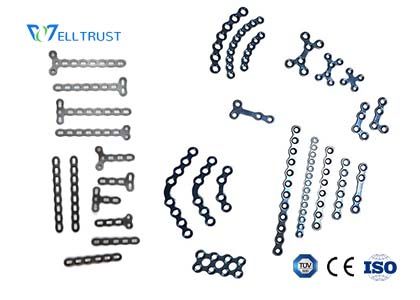
Bone plates are widely used components in orthopedic internal fixation systems. Designed to be secured to bone with compatible screws, these implants help maintain the intended alignment and stability of bone fragments during fracture management. Different plate designs are available to accommodate variations in bone anatomy, fracture patterns, and fixation requirements.
Understanding the main types of bone plates can help medical device distributors, procurement professionals, and healthcare providers compare product designs and identify suitable implant systems for their specific requirements. This article introduces common orthopedic bone plates, their structural characteristics, and important factors to consider when selecting them.
Orthopedic bone plates are implantable devices designed to support internal fixation. They are typically manufactured from implant-grade materials, such as titanium alloys or stainless steel, depending on the product design and applicable specifications. A plate generally contains a series of holes through which compatible screws can be inserted to secure the implant to the bone.
Bone plates vary in length, thickness, contour, hole configuration, and screw compatibility. These differences allow plate systems to be designed for particular anatomical regions and fixation approaches. The appropriate implant depends on factors such as the fracture pattern, bone anatomy, implant system design, and the treating surgeon's assessment.
Locking plates feature specially designed holes that allow compatible locking screws to engage with the plate. This connection creates a fixed-angle relationship between the screw and the plate. Depending on the implant system and clinical situation, locking plates may be considered for fractures where angular stability is an important design requirement.
Locking plate systems are available in different shapes and configurations for various anatomical regions. When selecting a system, users should verify screw compatibility, plate dimensions, available configurations, and the manufacturer's specifications.
Compression plates are designed to facilitate compression across selected fracture sites when used with the appropriate fixation technique. Some plates incorporate specially shaped holes that support controlled movement of a screw during insertion, helping generate compression along the bone under suitable conditions.
Compression plate designs vary according to their intended fixation method and anatomical application. Product selection should take into account the fracture characteristics, plate geometry, and compatible screw system.
Reconstruction plates are designed to allow contouring to complex bone surfaces. Their structural design can make them useful in anatomical regions where the bone shape requires a plate to follow a curved or irregular contour. Available models differ in dimensions, hole arrangements, and material specifications.
Before choosing a reconstruction plate, it is important to review the permitted contouring method and the manufacturer's instructions. Repeated or excessive bending may affect the mechanical properties of an implant.
Anatomical plates are shaped for specific bone regions. Examples include plates designed for the clavicle, distal radius, distal femur, proximal tibia, and pelvis. Their contours and hole positions are developed around the geometry of the intended anatomical area.
Because anatomical plates are designed for particular locations, selection involves checking the intended side or region, available sizes, screw options, and compatibility with the corresponding implant system. The actual suitability of a plate must be determined according to the clinical situation and professional judgment.
Titanium alloys and stainless steel are commonly used in orthopedic implant manufacturing. Each material has its own mechanical, physical, and manufacturing characteristics. The choice of material depends on the implant design, applicable standards, intended use, and product specifications.
When comparing bone plates made from different materials, buyers should review the stated material grade, dimensional specifications, surface finish, traceability information, and relevant regulatory documentation. Material selection should not be based on a general assumption that one material is suitable for every application.
Several factors should be considered when evaluating orthopedic bone plates:
These considerations can help distributors and procurement teams compare products systematically. Final implant selection and use must follow the manufacturer's instructions and the judgment of qualified healthcare professionals.
Well Trust provides orthopedic products for professional medical device markets. For buyers evaluating bone plate and screw systems, reviewing the available product range, dimensional options, material specifications, and compatible instruments is an important part of the procurement process.
Depending on the available product range, related categories may include anatomical plates, locking plates, reconstruction plates, bone screws, and associated orthopedic instruments. Buyers should confirm the specifications and compatibility of each product before placing an order.
For distributors and medical device sourcing teams, clear product information can support product comparison and communication. Well Trust can provide product details for inquiry and evaluation based on the specific models and requirements being considered.
Common categories include locking plates, compression plates, reconstruction plates, and anatomical plates. The available designs and intended applications vary by product system.
A locking plate allows compatible locking screws to engage with the plate, creating a fixed-angle connection. A compression plate is designed to facilitate compression across selected fracture sites when used with an appropriate fixation technique. Some systems combine different design features.
Not automatically. Material, dimensions, design, screw compatibility, and system specifications must be verified for each product. Implants should only be used according to their labeling and manufacturer's instructions.
Bone plates are designed to work with specified screw types and dimensions. Confirming compatibility helps ensure that the selected components match the intended implant system and its instructions for use.
Orthopedic bone plates are available in a range of designs to address different anatomical and fixation requirements. Understanding the differences between locking plates, compression plates, reconstruction plates, and anatomical plates provides a useful starting point for product evaluation. By reviewing plate dimensions, material specifications, screw compatibility, and supporting instruments, buyers can compare orthopedic implant systems more effectively. Well Trust welcomes product inquiries from professional buyers seeking further information about available orthopedic products and specifications.
Tel: 86-18102187175
Whatsapp:86-18102187175
E-mail: wellortho@welltrusttech.com
Working Hours: Monday-Friday UTC+8: 9:00AM-6:00PM
Add1: 1-1301 Xindu Building, Wandezhuang Street, Wanxing Street, Nankai District, Tianjin, China
Registered address: Room 225, No.2 Huatian Rd., Huayuan Industrial Park, Binhai High-tech Zone, Tianjin, China.
Well Trust(Tianjin) Tech. Co.,Ltd