
wellortho@welltrusttech.com
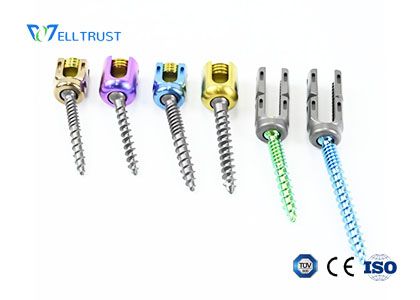
A pedicle screw system is selected as a complete spinal fixation platform rather than as an isolated screw. Surgeons, hospitals and orthopedic distributors should review the screw head design, diameter and length range, rod interface, compatible instruments and intended spinal region before choosing a system. Well Trust provides 5.5 mm, 6.0 mm and minimally invasive pedicle screw system options within its spinal product range.
This guide explains the main components of a spinal pedicle screw system, the difference between monoaxial and polyaxial designs, and the factors that support a structured purchasing review. The information is based on the product categories and specifications published on the Well Trust Spinal System pages.
A pedicle screw system is an implant and instrument platform used in selected spinal fixation procedures. The construct may include pedicle screws, rods, set screws, reduction components, crosslinks and dedicated insertion or preparation instruments. Each component must be compatible with the same system and selected according to the surgical plan and applicable product documentation.
Well Trust organizes its spinal range into several product groups, including 5.5 Spinal Pedicle Screw System, 6.0 Spinal Pedicle Screw System, Minimally Invasive Pedicle Screw System, anterior and posterior cervical systems, cages and spinal instruments. This structure allows buyers to review the implant and instrument requirements together instead of sourcing isolated components without compatibility confirmation.
Pedicle screws are available in different head configurations, diameters and lengths. The Well Trust 5.5 mm spinal pedicle screw page lists monoaxial, monoaxial reduction, polyaxial and polyaxial reduction screw types. The page also lists multiple diameter and length combinations, allowing the selected construct to be matched to the relevant system and surgical requirements.
Rods connect compatible screw heads and form the longitudinal part of the fixation construct. Crosslinks or connectors may be considered when required by the selected system configuration. Well Trust also lists a 5.5 mm Spinal Rod and Crosslink System. Buyers should confirm rod diameter, connection method and compatibility with the chosen pedicle screw system before placing an order.
Instrument compatibility is an important part of system selection. The procedure may require screwdrivers, rod holders, reduction instruments, taps, probes, distractors and other system-specific tools. The Well Trust catalog includes a Spinal System Instrument category. A quotation should clearly state which instruments are included and which are optional.
| Design | Key characteristic | Selection consideration |
|---|---|---|
| Monoaxial | Fixed head orientation within the screw design | Confirm the planned rod alignment and system technique |
| Polyaxial | Angular head movement within the system design | Review the available movement range and compatible instruments |
| Reduction screw | Designed with a head configuration intended to support reduction within the system | Confirm the reduction feature, rod interface and surgical technique |
| MIS pedicle screw | Configured for a minimally invasive spinal fixation workflow | Check percutaneous instruments, access requirements and complete system compatibility |
Screw sizing involves more than choosing the largest available diameter. The surgeon and clinical team consider the spinal region, pedicle anatomy, planned trajectory, required purchase and the available system range. The Well Trust 5.5 mm system page lists screw diameters from selected smaller sizes through 7.5 mm, while its MIS pedicle screw page lists a 5.0–7.0 mm specification range with several length combinations.
Length is equally important. The reviewed product pages list multiple lengths for different diameters, but the correct combination depends on the selected model and surgical plan. Buyers should request the current product catalog or technical sheet when the required diameter or length is not clearly shown on the website.
The reviewed Well Trust pages list titanium for the 5.5 mm spinal pedicle screw and the MIS pedicle screw. Titanium is also identified on those pages alongside CE and ISO information. Because documentation can vary by model, market and revision, the product-specific technical file, labeling and applicable regulatory documents should be checked before procurement or distribution.
Do not assume that two products with similar names have the same material, dimensions, instruments or regulatory status. The model number, system family and current manufacturer documentation should be recorded in the purchasing file.
A pedicle screw system performs as a coordinated platform. A screw, rod or instrument from a different system should not be treated as interchangeable without written compatibility confirmation. This is particularly important when hospitals combine implant inventory, instrument trays and products sourced from different suppliers.
Well Trust's spinal product range includes pedicle screws, rods, crosslinks, cages and spinal instruments. Buyers can use the 5.5 mm Spinal Pedicle Screw page and the MIS Pedicle Screw page as starting points, then confirm the complete configuration with the supplier before quotation.
A pedicle screw system is a spinal fixation construct that may include pedicle screws, rods, set screws, connectors and compatible instruments. The components are selected according to the spinal region, surgical plan and system specifications.
Monoaxial and polyaxial pedicle screws have different head movement designs. A monoaxial screw has a fixed head orientation, while a polyaxial screw allows controlled angular movement of the head within the system design.
An MIS pedicle screw system is designed for use with a minimally invasive spinal fixation workflow. The complete system and instruments must be confirmed for the intended technique and facility requirements.
The Well Trust product pages reviewed for the 5.5 mm spinal pedicle screw and MIS pedicle screw list titanium as the material. Buyers should confirm the current product documentation for the selected model.
Buyers should confirm the screw design, diameter and length range, rod and connector compatibility, instrument set, spinal region, packaging, documentation and applicable regulatory requirements.
Choosing a pedicle screw system requires a complete review of implant design, sizing, material, rods, connectors and compatible instruments. Well Trust offers 5.5 mm, 6.0 mm and MIS spinal pedicle screw system categories with multiple screw configurations. Hospitals, surgeons and distributors should use the product-specific catalog and instructions to confirm the final system before purchase, surgical use or market distribution.
Product information note: This article is provided for product education and purchasing reference. It does not replace professional surgical training, clinical judgment, the applicable instructions for use or the regulatory requirements of the relevant market.
Tel: 86-18102187175
Whatsapp:86-18102187175
E-mail: wellortho@welltrusttech.com
Working Hours: Monday-Friday UTC+8: 9:00AM-6:00PM
Add1: 1-1301 Xindu Building, Wandezhuang Street, Wanxing Street, Nankai District, Tianjin, China
Registered address: Room 225, No.2 Huatian Rd., Huayuan Industrial Park, Binhai High-tech Zone, Tianjin, China.
Well Trust(Tianjin) Tech. Co.,Ltd